Water Purification: How to Turn 'Dirty Sludge' into Safe Drink
You may have hundreds of liters of supplies, but in the reality of a prolonged crisis, water will eventually run out. Then you face a choice: risk drinking from an uncertain source, which could end in a fatal infection, or know how to turn 'dirty sludge' into safe water for your family.
The rule of three threes is merciless: you can survive 3 minutes without air, 3 days without water, and 3 weeks without food. That's why the ability to purify water from a river, well, or rain is an absolute foundation of your safety. Below you will find a substantive overview of methods that actually work when municipal water systems cease to exist.
1. Understand the enemy: What are we actually removing?
Purification is a multi-stage process. In water, we look for three types of threats:
- Mechanical impurities: Sand, silt, leaves. They carry bacteria.
- Biological impurities: Bacteria, protozoa, and viruses (dysentery, poisoning).
- Chemical impurities: Pesticides, heavy metals, oils.
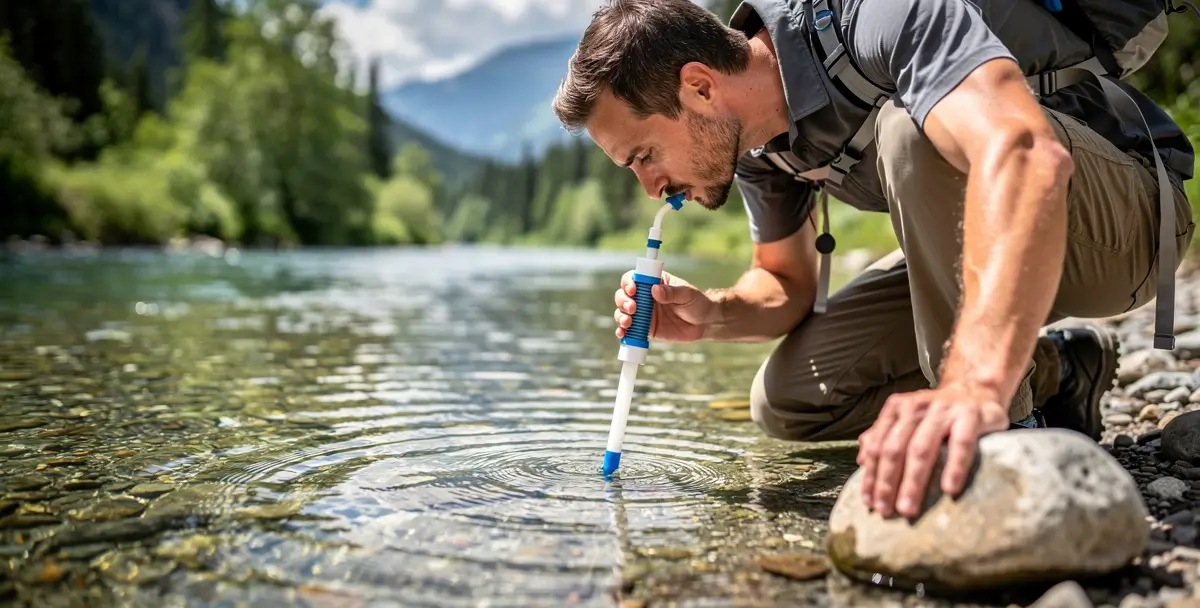
2. Gravity Filters and Filter Bottles: The First Line of Defense
Based on hollow fiber technology – semi-permeable membranes with microscopic holes.
Filtration Solutions
3. Chlorine Dioxide Tablets: Chemical Sterilization
If you don't have a filter or the water comes from a contaminated place (e.g., flood), chemistry becomes a necessity.
- Advantages: Lightweight, cheap, long expiration date. Ideal pocket backup.
- Action: One tablet per liter, wait at least 30 minutes (longer if water is cold).
- Important: Tablets kill biological life but don't remove silt. Filter water through fabric first.
4. Boiling: The Golden Standard That Survives Everything
The simplest and most reliable disinfection method available to everyone.
Bring water to a full boil and cook for at least 2 minutes. This kills almost all disease-causing pathogens.
Requires a vessel and a heat source. If you plan for a blackout and power outage, you must have a portable gas stove.
5. Emergency Methods: SODIS and DIY Filter
When you have nothing, you must improvise.
- SODIS (Solar Disinfection): Exposing a clear PET bottle to sun for at least 6 hours. UV rays deactivate bacteria.
- DIY Filter: Layers of gravel, sand, and charcoal in a cut bottle. Only removes mechanical impurities – water must be boiled afterward.
If your car kit contains a filter, it must be dry. A used filter will freeze in the cold and burst, becoming useless.
Effective purification is a cascade process: mechanics, pathogens, quality. Start building resilience by analyzing your home water storage.
Frequently Asked Questions about Purification
helpDo filters remove viruses?
Most standard travel filters (0.1 micron) remove bacteria and protozoa but let viruses through. To remove viruses, you need a 0.02-micron filter or additional chemical disinfection/boiling.
helpDo chlorine tablets change the taste of water?
Yes, water can have a specific pool aftertaste. It can be neutralized using activated carbon filters or by letting the water sit in an open container after disinfection.