Evacuation vs Hiding: The Most Important Decision in the Hour of Trial
In real life, a crisis rarely starts with spectacular explosions. More often, it is heralded by a disturbing silence, a sudden power outage, or a silent internet. The first 72 hours are a time of total chaos, where your first decision – to stay or flee – will determine the fate of your family.
1. Foundation of decision: Your home as the first choice
For most foreseeable crisis scenarios – from infrastructure failures to hybrid attacks – the best strategy is to remain in a familiar environment. Your apartment or house is the place where your water storage and food supplies are gathered, which are extremely difficult to transport in sufficient quantities in field conditions.
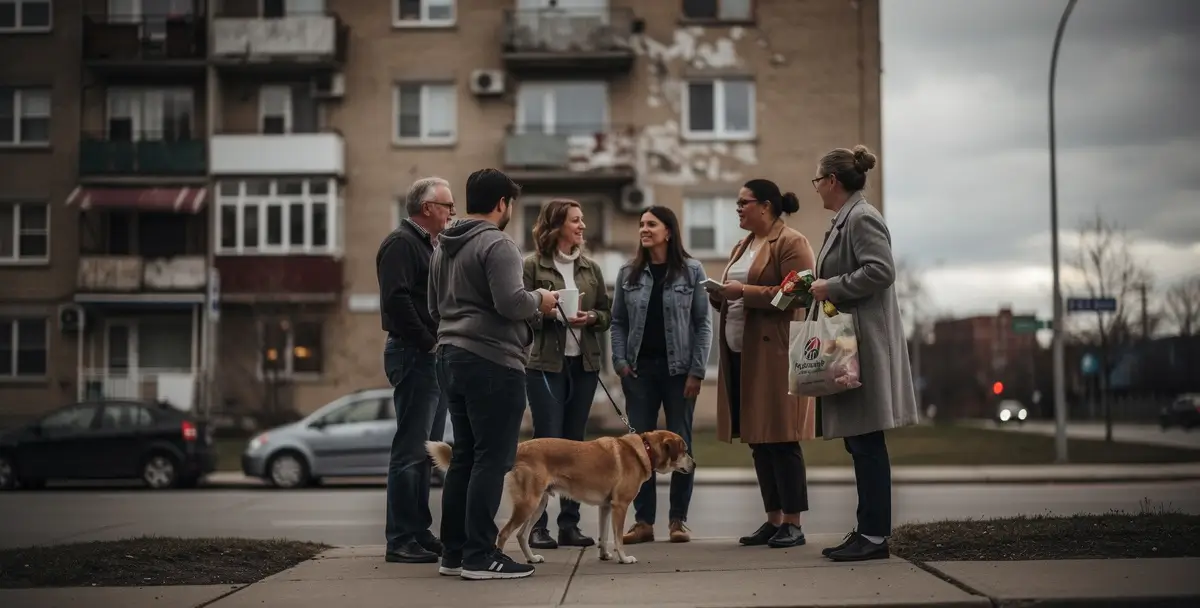
Statistics show that individuals acting in an integrated local group have a 2.5 times higher chance of survival than so-called 'lone wolves' fleeing into the unknown. Your neighbors, although you may only exchange a cool 'good morning' daily, in a threat situation become a natural support network, where one has a generator, another is a doctor, and yet another can secure the building entrance. By staying in place, you avoid the risk of being treated as a stranger or 'intruder' in new territory, where resources may be rationed only for local residents.
Safety Rules at Home
True survival psychology is based on cool data analysis. As long as your building is intact and access to water and heat is possible thanks to your supplies, fleeing is a logistical error.
2. Decision Tree: When to absolutely leave the city?
There are, however, situations in which staying at home is a death sentence. The first and most important signal for evacuation is an official order from authorities and law enforcement, especially in the immediate frontline zone. Experiences from Donbas teach that those who delayed departure until the last moment often died under artillery fire, trying to flee at the moment the front was already passing through their backyards.
- Location: If you live near transportation hubs, power plants, military bases, or industrial plants, you will become a 'ricochet strike' target. Evacuation must occur before roads are blocked.
- Loss of Life Parameters: Lack of an alternative heat source in winter will turn the house into an icy trap within 24–48 hours.
- Lack of Water: When your supplies have run out and water purification from local sources is impossible due to contamination, you must move to humanitarian aid distribution points.
Fleeing is not about running through the forest in camouflage, but about 'strategic dislocation' to a previously prepared asylum, e.g., a family home in a safer region of the country.
3. Logistics of evacuation: Why 'your plan' will likely fail?
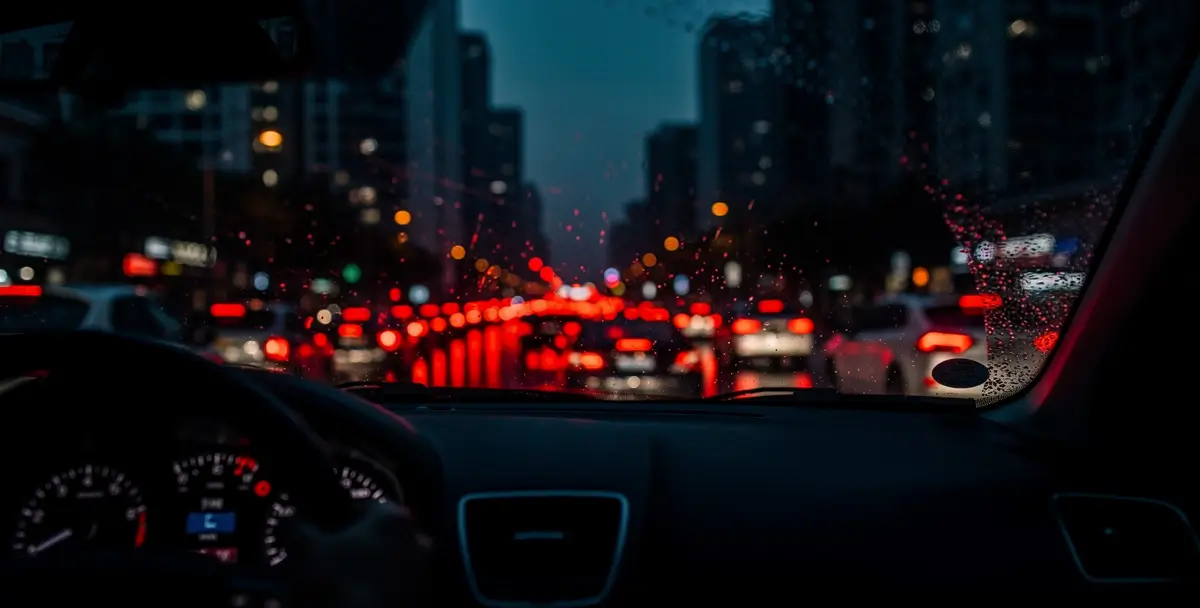
In a crisis, civilization is 'turned off'. The Internet doesn't work, which means no Google Maps or GPS; terminals at gas stations don't respond, so you won't buy fuel unless the station is open and doesn't introduce rationing (e.g., 5 liters per head). Highways and expressways will likely be reserved exclusively for military columns and emergency services.
Layers of Your Evacuation Plan
4. Action algorithm: STOP and 4U protocol
Before you make any decision about movement, implement the STOP algorithm (Stop, Take a breath, Observe, Proceed).
- Stop: Do not run to the car just because a neighbor is packing the trunk.
- Take a breath: Take three deep breaths to lower cortisol levels; your survival psychology requires logical thinking, not an escape instinct.
- Observe: Check reliable sources of information, such as a battery-powered radio or RSO app, to verify if alarm signals are a real threat.
- Proceed: If the threat is immediate (e.g., active shooter or explosion nearby), apply the 4U protocol (Understand, Undercover, Unfold, Unitize - in Polish contexts often kept as 4U based on Uważaj, Uciekaj, Ukryj się, Udaremnij).
Modern disinformation aims to make you make a wrong decision and, for example, block a key communication artery with your car. Therefore, apply the rule of three sources: evacuation information must be confirmed in at least three independent channels.
5. Preparing for both variants: What must you have?
Regardless of the decision, you must have digitized documents and copies on an encrypted drive. During evacuation, you must be able to prove who you are, that you have custody rights over children, and that the vehicle you are driving belongs to you. Your financial security should be based on a cash supply in three currencies (PLN, USD, EUR) and a small amount of investment gold.
Hiding Variant - CBRN and Medicine
The most powerful tool is knowledge and a first aid course, not survival gadgets.
Summary: Choose wisely before hour 'W'
The decision about evacuation vs. hiding is not a one-time choice, but a continuous process. The best way to survive is to have Plan A (staying at home), Plan B (home is threatened, moving locally to a shelter), and Plan C (full evacuation outside the city). Test these variants regularly; every six months, check how quickly your family is able to pack the most important things and go down to the basement.
Do not be fooled by a false sense of security resulting from owning 'survival gadgets'. Your most powerful tool is knowledge, training, and skills (e.g., first aid course) and relationships with people around you. In a crisis, those who are flexible, can use water purification in primitive conditions, and do not panic when sirens wail win. Start building your resilience today by analyzing the topography of your area and locating the nearest 'abisynka' – a free water source that can save your life when pipes run dry.
Frequently Asked Questions about Evacuation
helpWhen does my home become dangerous?
When you lose access to basic life parameters (lack of water, lack of heat in winter) or when the house is in the immediate vicinity of strategic military/industrial targets.
helpWhat to do if I get stuck in a traffic jam during evacuation?
You must have a walking variant prepared. If the road is completely blocked, the car becomes a trap. Your 72H backpack should allow you to march to the nearest safe point.