
Shelling Procedures: How to React to an Air Raid Alarm
Most of us, upon hearing the sound of a siren, instinctively look at the calendar for the date of the next anniversary. This is a dangerous habit that, in an era of rising threats, can prove murderous. True survival psychology is not based on fear, but on cool analysis and automatic actions that decide your life within the first few minutes of a real threat occurring.
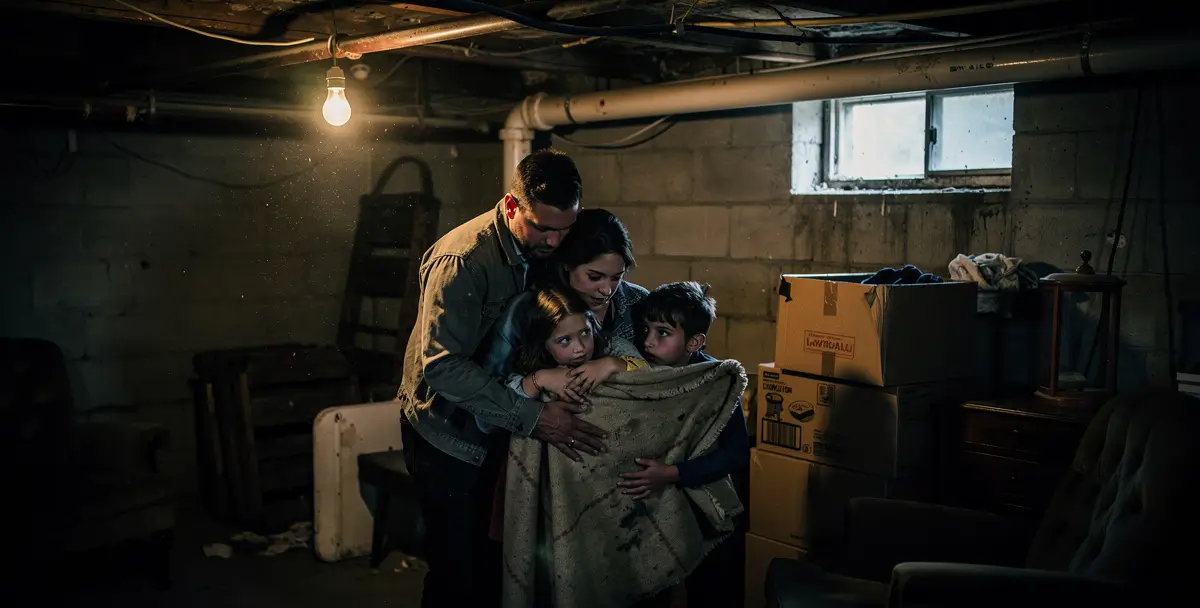
Threat Awareness
A crisis doesn't always start with spectacular explosions; much more often it is heralded by a disturbing information silence, non-functioning store terminals, or a silent internet. However, when the warning system is activated, you must know how to interpret what you hear. In the realities of modern conflict, where impact can occur anywhere, the ability to properly react to an air raid alarm is an elementary competency of every conscious citizen.
1. Signal Recognition: How to distinguish a test from a real attack?
The public warning and alerting system in Poland is precise, though often ignored. You must know two basic types of messages:
Alarm Signals in Poland
In small towns, modulated sirens are sometimes used by the fire department. In the era of disinformation, an aggressor may deliberately exploit these gaps. Always apply the principle of verification in several sources.
2. The First 15 Seconds: STOP Algorithm
When the world around you 'wails', your biggest enemy is not a missile, but a sudden surge of cortisol that paralyzes logical thinking. People in affect make decisions that, instead of saving, bring danger upon them – for example, running into an open space to 'see what's happening'. To prevent this, professionals use the STOP algorithm (Stop, Take a breath, Observe, Proceed):
- Stop: Interrupt previous activities. Do not yield to crowd psychology.
- Take a breath: Three deep breaths. This is a biological necessity – mastering emotions lowers stress levels and allows the brain to return to analytical mode.
- Observe: Spend 15 seconds assessing the situation. Do you have your 72H evacuation backpack at hand? Where are your loved ones?
- Proceed: Take action according to the plan you prepared earlier.
This algorithm is the foundation of your survival psychology. Remember that in the hour of trial, you don't rise to the level of your possibilities, but fall to the level of your training.
3. Why 'Level Zero' is the only right choice?
Experiences from armed conflicts unambiguously indicate that going below level zero is the most effective method of protection against missile shelling. This results from a simple physical fact: missiles and artillery shells usually move on a parabolic trajectory.
If a missile hits an apartment block, it usually strikes higher floors. Staying on the 10th floor of a high-rise when a missile is incoming is extremely irresponsible. By going downstairs to the basement, underground garage, or metro station, you drastically increase your chances of survival.
Features of a Good Shelter
4. Data Verification – Digital and Analog Sources of Truth
In a crisis, information is a weapon. The aggressor aims to make you make a wrong decision – for example, blocking a key communication artery with your car during a frantic escape. Your duty is to use reliable sources and apply the rule of three independent sources:
- RCB Alert: SMS notification system. In an attack situation, it may contain critical instructions.
- RSO App: A tool that allows checking the nature of the threat and administration guidelines.
- Battery Radio: Your most important analog link. Terrestrial radio (PR1 – 225 kHz) is extremely difficult to jam.
Before taking radical steps, make sure the information is confirmed in at least three channels. Do not blindly trust social media, which in a crisis become 'sounding boards' for bots and disinformation.
5. If you don't make it down: Three-wall rule and glass protection
The situation can be dynamic. If you hear explosions or are certain that a ballistic missile is already in the air, you have no more than 3 minutes to react. In such a case, you may not have time to go down to the basement. You must then implement an internal apartment protection procedure:
Internal Protection
If shelling catches you on the road, do not stay in the car. Park so as not to block the road and seek cover in a solid building. A car offers zero protection from fragments. Check your car kit equipment.
6. Shelter Preparation: From airtightness to logistics
Your hiding place must be prepared in advance, taking into account CBRN threats (chemical, biological, radiological):
Shelter Logistics
Also remember documents and copies. Digitized data on an encrypted medium should be in your emergency backpack.
7. Neighborly Cooperation: Strength in numbers
In a crisis, no one is an island. Survival statistics in extreme situations are relentless: people acting in an organized group have 2.5 times higher chances of survival. Neighborly cooperation is a strategic element of your housing estate's civil defense.
Joint watches, sharing resources, or helping elderly and deaf people (who may not hear sirens) are actions that really increase the security of all residents.
8. Building Muscle Memory – Training and simulations
Knowledge is only theory. Key are training and skills that you must practice in peacetime.
- Once every six months, conduct a test with your family: how long does it take to gather backpacks and go down to the shelter?
- Check flashlight batteries and rotate the water supply.
- Test preparing a warm meal on a camping stove with no power.
The most important thing you can learn is stopping hemorrhages and using a tactical tourniquet.
Summary: Your Safety is Your Responsibility
An air raid alarm is not a sentence, but a call to professional action. The civil defense system in Poland is in a transformation phase, which means that you are the first and most important link in your family's safety chain. Do not wait for alarm signals to start thinking about shelter.
Start by analyzing your immediate surroundings. Go out of the house, look around, and locate 'level zero'. Take care of financial security by gathering a supply of cash in hard currencies, and invest in first aid knowledge. When sirens start wailing with a modulated tone, your peace will be the result of the plan you implemented today. Building resilience begins with the awareness that the world as we know it is a gift that we must be able to take care of ourselves when the systems we are used to fail.
FAQ: Shelling Procedures
helpHow much time do I have to reach shelter after hearing a siren?
Usually from 3 to 15 minutes, depending on the type of incoming threat. Therefore, locating a shelter in your immediate surroundings is crucial.
helpDoes a car protect against shelling?
No. A car offers zero protection against fragments and shockwaves. In case of shelling, you should leave it and seek cover in a solid building.

